


The Calgary Chinook Effect: Why Your Roof is Growing Ice Dams (And How to Stop Them)

If you live in Southern Alberta, you are probably familiar with our winter rollercoaster. One day it is -25 degrees Celsius, and the next, a warm Chinook wind rolls over the Rocky Mountains, pushing temperatures above freezing in a matter of hours.
While we all love a break from the bitter winter cold, these rapid temperature swings wreak havoc on local roofs. If you have noticed massive, heavy icicles hanging from your gutters, or thick ridges of ice building up along your roofline, you are dealing with ice dams.
Let’s look at why the Calgary climate makes ice dams so common, the damage they can do to your home, and the only permanent way to solve them.
What is an Ice Dam and Why Does it Form?
An ice dam is a thick ridge of solid ice that forms along the cold edge of your roof—usually right above your eavestroughs and gutters.
Many homeowners assume that ice dams are a "gutter problem" or a "roofing problem." In reality, ice dams are almost always caused by heat escaping from your living space into your attic.
Here is the step-by-step breakdown of how a Calgary Chinook makes this worse:
Heat Escapes: Warm air from your house leaks up into your attic because of thin insulation or unsealed ceiling gaps.
The Roof Warms Up: This escaped heat warms up the upper sections of your roof deck, causing the snow sitting directly above it to melt.
Water Runs Down: The melted snow runs down your warm roof until it reaches your cold eaves (the overhang past your exterior walls), which do not have warm attic space underneath them.
Water Refreezes: When the runoff hits the freezing cold eaves, it instantly turns back into ice. Over several days of freeze-thaw cycles, this ice builds up into a solid dam.
The Pool Forms: Behind this ice dam, newly melted snow has nowhere to drain. It pools on your shingles, eventually seeping underneath them and leaking directly into your ceilings, walls, and insulation.

The Hidden Damage Ice Dams Cause to Calgary Homes
Ice dams are not just an eyesore; they are a direct threat to your property. If left untreated, they can cause serious, expensive damage:
Ruined Attic Insulation: When water backs up under your shingles, it drops into your attic. Wet insulation loses its performance immediately, turning a minor draft into a major heating bill.
Structural Wood Rot: Constant moisture sitting on your roof deck and fascia boards causes the wooden framing to soften, rot, and harbor destructive mold.
Damaged Gutters & Siding: The sheer weight of a massive ice dam can rip heavy-gauge seamless aluminum gutters right off your fascia. As the ice melts and drips, it can also run behind your exterior siding, damaging your wood sheathing.
Interior Drywall Ruin: Once water passes your roof deck, it will find its way down into your home, resulting in peeling paint, water-stained ceilings, and warped window frames.
Why Clearing Your Gutters Won't Stop Ice Dams
Every spring and winter, we see homeowners climbing dangerous ladders to hack away at ice with hammers, or pouring chemicals onto their roofline.
Not only is this incredibly dangerous, but it also damages your shingles and gutters. More importantly, it doesn’t solve the root cause.
Your gutters do not cause ice dams. Even if you completely removed your eavestroughs, the ice would still freeze at the cold edge of your roof overhang. To stop ice dams permanently, you have to fix the temperature difference on your roof deck.
Three Permanent Solutions to Eliminate Ice Dams
To stop ice dams, your entire roof deck needs to stay at the same temperature as the outdoor air. We achieve this through a professional "three-pillar" approach to attic health:
1. Upgrade to Modern Blown-In Insulation
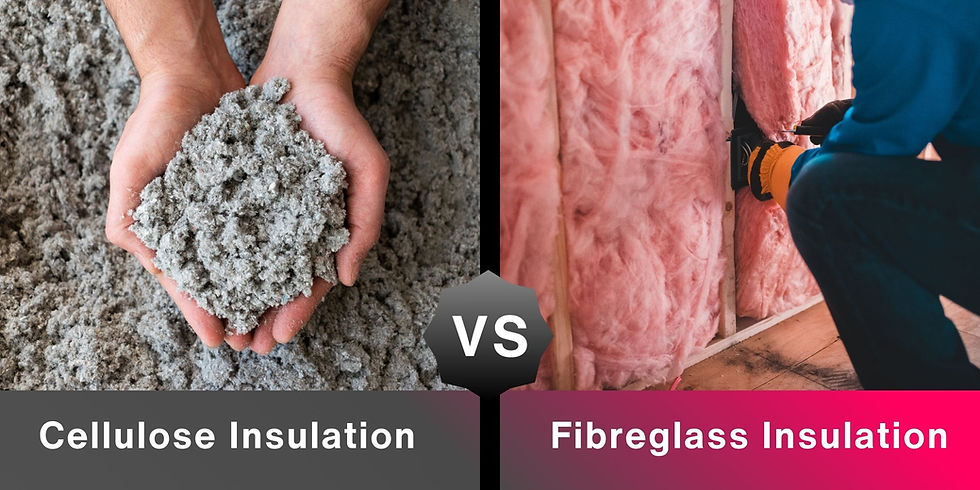
If your home was built before 2015, your attic likely only has 6 to 8 inches of loose-fill insulation (equivalent to $R\text{-20}$). To block heat from rising into your roof space, we top up your attic to modern standards—delivering 16 to 20 inches of premium blown-in cellulose or fiberglass (targeting $R\text{-50}$ to $R\text{-60}$). This acts as a thick thermal blanket, keeping the heat in your home and your roof deck cold.
2. Complete Professional Air Sealing
Insulation blocks heat transfer, but it cannot stop moving air. Our crew crawls deep into your attic to find and seal "bypass paths." We seal gaps around plumbing stacks, electrical wires, ceiling light fixtures, and your attic hatch using specialized expanding foam. Stopping this rising warm air is the single most effective step in ice dam prevention.
3. Maximize Soffit & Ridge Ventilation
Your attic needs to breathe. Cool outdoor air must enter through your vented aluminum soffits at the bottom of your roof, sweep across the underside of the roof deck, and exit out of the ridge vents at the top. This airflow flushes out any minor heat leaks, keeping the roof deck perfectly cold. We install durable rafter vents (baffles) to ensure your new blown-in insulation never blocks this critical intake airflow.
Ready to Protect Your Roof and Lower Your Bills?
Don't wait for the next major freeze-thaw cycle to damage your ceilings and gutters. A cold roof is a happy, healthy roof.
At Integral Construction, we provide honest, hands-on attic audits and roofline assessments throughout Calgary, Airdrie, Okotoks, Cochrane, and surrounding areas. Get a free quote or insulation inspection with Nate and the team to keep your home comfortable and safe year-round.
Call Nate Today: 403-978-5553
Email: Natebirse@me.com
Serving: Calgary, Airdrie, Okotoks, Cochrane, and Surrounding Areas
Our Services: Blown-in Insulation, Windows, Doors, Siding, Roofing, Decks & Fences, Soffits & Fascia, Gutters, Carpentry.
Comments